Water Heater Repair
Not every problem means a new tank. Our water heater repair visits cover leaking valves, pilot and ignition faults, and no-hot-water calls.
Residential Water Heater Service
Leaking tank or cold showers? Get a properly sized new water heater, installed cleanly and strapped to code, so hot water stays reliable.
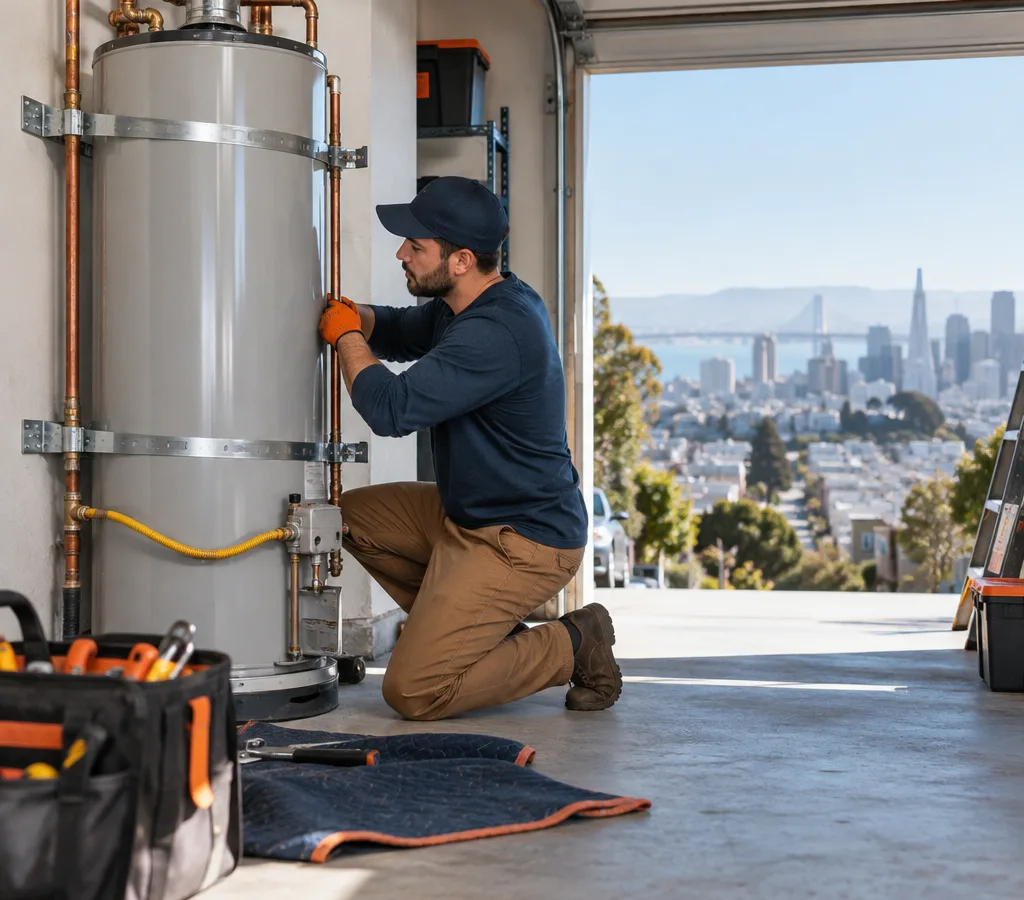
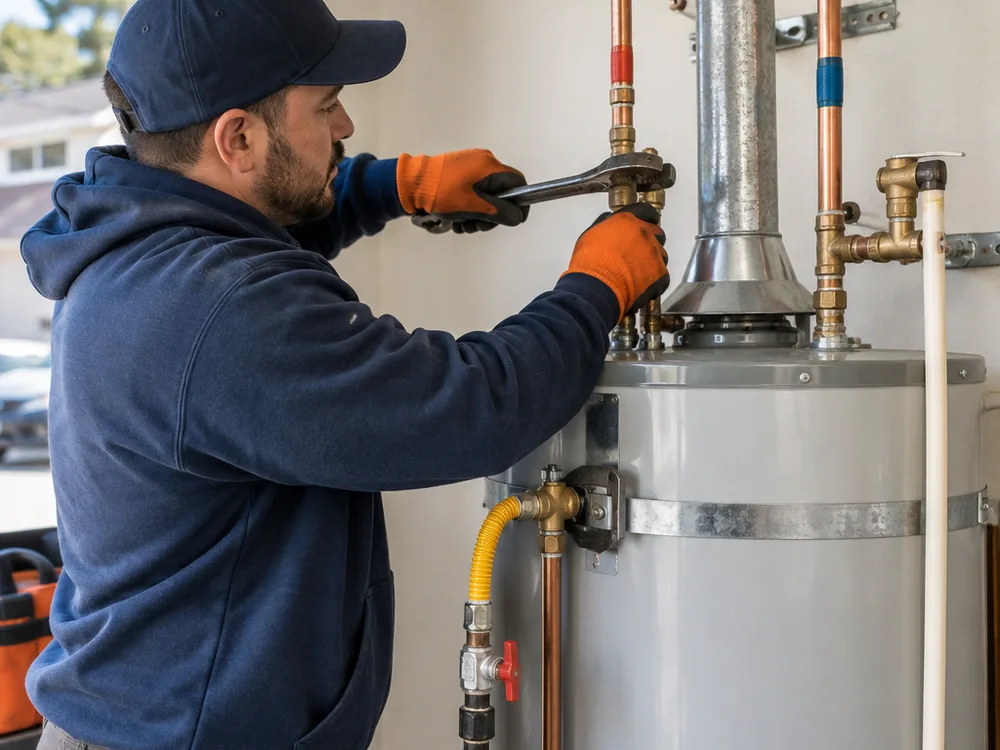
When a tank starts leaking, runs out of hot water too fast or won't keep the pilot lit, replacing it is usually the practical move. We help you pick the right type and size, remove the old unit, and install the new heater with a working shutoff, a correctly piped relief valve, proper venting and seismic strapping.
California law requires every new or replacement water heater to be braced, anchored or strapped against earthquakes, so we fit straps that suit the new tank instead of reusing old ones that no longer match.
You'll know what is being replaced, what stays and what happens next before work starts. If you're weighing a like-for-like swap against an upgrade, we'll walk through the tradeoffs that matter in tight utility closets, garages and older plumbing.
Our Services
Not every problem means a new tank. Our water heater repair visits cover leaking valves, pilot and ignition faults, and no-hot-water calls.
Short on space or tired of running out? We handle tankless water heater installation, including gas line sizing and a new vent route.
Ready to move off gas? We take care of heat pump water heater installation, from checking your electrical panel to placing the unit where it can breathe.
Replacement Standards
We match the new heater to your household demand and the location. That covers tank capacity or tankless output, fuel type, venting path and how far fixtures are from the unit.
We pay attention to the parts that prevent problems later: a working shutoff valve, proper relief valve piping, correct venting where required and secure strapping.
Many installs happen in garages, basements, closets or utility rooms with little clearance. We protect the area, keep the work zone tidy and leave the space usable.
If the job needs more than a simple swap, like replacing corroded piping, updating the vent connector or correcting an unsafe setup, we explain the change and why it matters before going ahead.
You shouldn't have to deal with a heavy tank after the install. We remove the old water heater and the debris so you're not left figuring out disposal.

We replace residential water heaters across San Francisco, and that work is shaped by the housing here: older plumbing connections, compact utility areas and garages where securing the tank properly matters.
You'll get clear communication on what's included, what could affect the install (access, venting, shutoff condition, corrosion) and what the timeline looks like.
If you need documentation for a property file or want the work kept tidy for tenants, tell us up front and we'll plan for it.
Planning Your Budget
Most replacements run about $2,000 to $6,500, depending on the unit and site conditions. A like-for-like tank swap usually sits at the lower end, while tankless upgrades and jobs that need venting or gas line changes land higher.
Heat pump installs cost more because they often need electrical work. CleanPowerSF puts a typical one in San Francisco at $6,000 to $9,000.
Final price depends on heater type, capacity, venting, access, permit needs and whether shutoff valves or piping need replacing. We confirm the exact cost after seeing your existing setup.
From Call to Hot Water
We gather the basics about your current heater, where it is and what's going wrong, then set a time that fits your household or building access rules.
We confirm fuel type, capacity, venting, clearances, shutoffs and connection condition. You get a written scope that separates a straightforward replacement from any required updates.
We shut down safely, drain and remove the old unit, set the new heater, make the connections and install required safety parts like the relief line and strapping.
We bring the system online, check for leaks, set the temperature and confirm stable operation, then show you the shutoff locations.
Local Coverage
We replace water heaters in homes all over the city, and each area brings its own install challenges.
Sunset District
Many homes keep the water heater in the garage near laundry and storage, so clearance, strapping and tidy work keep the space functional.
Richmond District
Older housing can mean aging shutoff valves and corroded connections, and a careful swap reduces the chance of new leaks after the heater is set.
Mission District
Mixed building types often include tight utility closets or shared access, so venting, noise and clean relief piping need planning.
Pacific Heights
Larger, multi-level homes benefit from right sizing and recirculation so hot water reaches distant fixtures quickly.
Noe Valley
Hillside homes and cramped mechanical areas make access a real factor, so staging and safe removal matter as much as the heater itself.
Common Questions
Many replacements are finished in a single visit once the right unit is chosen and site conditions are confirmed. Jobs take longer when venting, gas piping, shutoffs or clearances need updates first.
Plumbing permits here are issued by the Department of Building Inspection. Once we've seen your setup, we'll tell you what your installation needs.
Yes. We replace water heaters in condos and small multi-unit properties where access, shutoffs and building rules matter, and we can plan the work around those rules.
A leaking tank, heavy internal corrosion, repeated failures or very inconsistent hot water usually point toward replacement. If a repair makes more sense, we'll tell you and explain the tradeoffs.
The fuel type (gas or electric), where the unit is, the approximate tank size or whether it's tankless, and photos of the connections and venting. That helps us plan for access and suggest the right options.
Yes. We remove the old unit so you're not left with a heavy tank. Let us know if it's in a tight space or up stairs so we can plan a safe removal.
Tell us what your current unit is doing and where it's installed. We'll recommend the right replacement and confirm the plan on site before work begins.